
On-Page SEO for Paving Contractors Losing Leads to Broad Pages
We give every page one clear service, buyer, location, and next step — improving titles, headings, content, keywords, internal links, and images so your site produces more qualified calls, residential estimates, and commercial proposals.
What is on-page SEO for paving contractors?
On-page SEO improves the visible information and structure of each page — helping customers quickly understand your service, coverage, experience, and next step.
Strong paving content connects every page with one main service, one clear customer need, relevant service areas, useful details, supporting photos, and a direct contact action. A driveway page shouldn’t compete with a commercial parking-lot page.
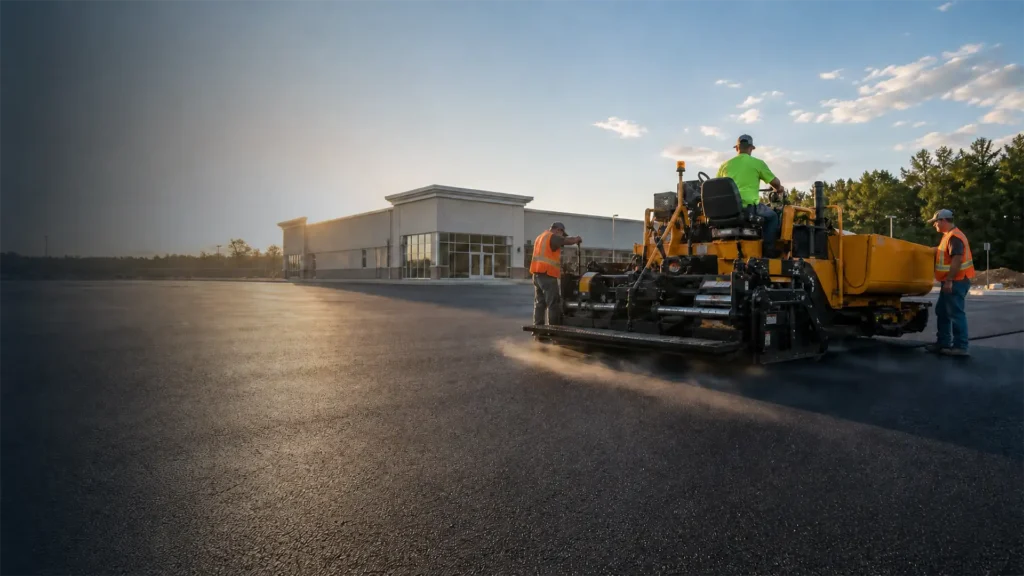
Why broad paving pages lose valuable leads
Broad pages rarely explain any service properly. A homeowner needing driveway repair and a property manager planning resurfacing require different information, proof, and contact options. Weak paving SEO often includes:
- One page covering every service
- Several pages targeting the same keyword
- Missing commercial paving pages
- Repeated location content
- Vague titles and headings
- Thin service descriptions
- Weak estimate buttons
- No internal linking plan
Focused pages give each project type enough relevance, detail, and proof to support a qualified enquiry.
What’s included in our on-page SEO
We start with your services, locations, preferred projects, existing pages, and current rankings — then build a practical keyword strategy and page-improvement plan.
Keyword & page mapping
- Existing keyword rankings
- Residential & commercial terms
- Install, repair & resurfacing
- Driveway & parking-lot terms
- City & county markets
- Keyword-overlap & missing pages
Titles & meta
- Unique title tags
- Relevant primary keywords
- Clear service & location context
- Concise meta descriptions
- Natural CTA wording
- Duplicate-metadata checks
Heading structure
- One H1 per page
- Service-focused H2 headings
- Question-based H3 headings
- Logical section order
- Clear keyword placement
- Featured-answer opportunities
Service-page content
- New asphalt installation
- Driveway paving & replacement
- Commercial parking lots
- Resurfacing & repair
- Sealcoating & maintenance
- Service, proof & next step on each
Internal linking
- Home to priority services
- Service pages to locations
- Location pages to services
- Blogs to matching services
- Case studies to related work
- Clear, descriptive anchor text
Images & calls to action
- Before-and-after photographs
- Local project galleries
- Optimized filenames & alt text
- One clear next step per page
- Estimate & assessment requests
- Fewer steps to contact
broad keywords is all most paving websites target — with no proper keyword map — leaving valuable services and markets completely unsupported.
- Residential vs commercial paving
- Installation vs resurfacing
- Repair vs replacement
- Driveways vs parking lots
- Sealcoating & maintenance
- City & county service areas
- Pricing & estimate questions
How on-page SEO produces more calls and jobs
Better pages help customers confirm the service, coverage, experience, and contact path — quickly.
One page, one purpose
Every page targets one main service, buyer, location, and next step — so nothing competes and each project type gets the relevance it needs to rank and convert.
Proof before the estimate
Before-and-after galleries, reviews, and commercial case studies give buyers the evidence they need before requesting a quote.
A clear next step
Residential pages drive estimate requests; commercial pages drive site assessments and proposals — with no unnecessary steps between interest and contact.
On-page SEO questions from paving contractors
What does on-page SEO include for a paving company?
Keyword mapping, title tags, meta descriptions, headings, service content, internal links, images, project proof, and calls to action. We give each page one clear purpose and connect it with the correct paving service, customer need, location, and contact action.
How many keywords should one paving page target?
A page should focus on one main topic and a small group of closely related terms — not every service or city. We map broader and supporting keywords according to the page’s service, buyer, location, project type, and conversion goal.
Can you improve our existing paving pages?
Yes. We keep useful information and rewrite weak, repeated, or poorly targeted sections. We also flag missing services, keyword overlap, unclear headings, thin content, weak internal links, and calls to action that may stop qualified visitors from requesting an estimate.
What’s the difference between on-page and technical SEO?
On-page SEO improves visible content, keywords, headings, internal links, images, and calls to action. Technical SEO covers crawling, indexing, speed, redirects, mobile performance, forms, and tracking. Both work together — strong content can’t perform on a weak website.
How do you measure on-page SEO results?
We track keyword rankings by page, organic calls, estimate forms, commercial proposals, conversion rates, lead locations, and lead quality — showing which service pages generate business opportunities and which still need clearer content or a better contact path.
One market, one paving-page strategy — is yours open?
We provide on-page SEO to one direct paving company in each agreed market. Once a client secures an area, we won’t build a competing service-page and keyword strategy for another local contractor.
- Confirm your paving services
- Review your service areas
- Check whether the market remains open
- Audit your existing pages
- Identify keyword overlap
- Find missing service content